

HOLY WAR HORROR: IRAN’S LEADER INVOKES JIHAD, VOWS ‘BATTLE BEGINS’ AS TRUMP DEMANDS ‘UNCONDITIONAL SURRENDER’
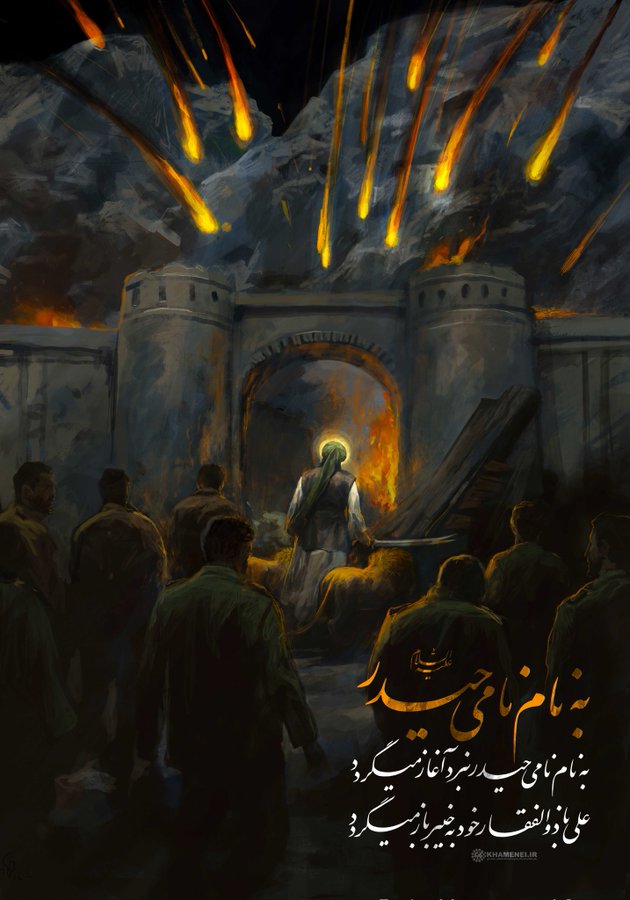
به نام نامی #حیدر، نبرد آغاز میگردد
علی با ذوالفقار خود، به #خیبر باز میگردد#الله_اکبر pic.twitter.com/yGYrXUDGoK— KHAMENEI.IR | فارسی 🇮🇷 (@Khamenei_fa) June 17, 2025
Iran’s state media warned of a “surprise” attack Tuesday night into Wednesday that “the world will remember for centuries,” though no specifics were confirmed.
Hours ago, Reuters reported Iran’s ambassador to the United Nations in Geneva stating, “If we come to conclusion that United States is directly involved in attacks on Iran, we will start responding to the US.”
This marks the latest threat against American interests, following intelligence reports that Iran has prepared missiles for potential strikes on U.S. bases in the Middle East if Washington joins Israel’s campaign.

Early Wednesday, the Israeli Defense Forces reported shooting down three Iranian drones infiltrating northern Israel, triggering air raid sirens in the Golan Heights. Iran launched two barrages of missiles targeting Tel Aviv, with explosions reported over the city.

The IDF confirmed strikes on Iran’s nuclear and missile programs, stating, “These strikes directly degrade Iran’s ability to threaten Israel and the region.”
Israeli officials issued evacuation warnings for southwestern Tehran, signaling further attacks.
A major explosion rocked Tehran around 5 a.m. local time Wednesday, following earlier predawn blasts, though Iranian authorities have not acknowledged the strikes.
The Institute for the Study of War reported Iran’s missile launches have dwindled from over 200 in initial waves to roughly 36 in recent attacks, suggesting a depleted arsenal.

The president escalated his rhetoric, demanding Iran’s “UNCONDITIONAL SURRENDER” in a Truth Social post.
In another provocative statement, Trump wrote, “We know exactly where the so-called ‘Supreme Leader’ is hiding. He is an easy target, but is safe there – We are not going to take him out (kill!), at least not for now. But we don’t want missiles shot at civilians, or American soldiers. Our patience is wearing thin.”
Trump’s posts followed reports that he rejected an Israeli proposal to assassinate Khamenei, citing concerns it would inflame the conflict.
However, two U.S. officials told CNN that Trump is warming to the idea of striking Iranian nuclear facilities, souring on diplomatic solutions unless Iran makes concessions.
The president met with his national security team Tuesday after speaking with Israeli Prime Minister Benjamin Netanyahu, as the White House weighs deeper U.S. involvement.
This spiral of violence didn’t erupt overnight. It’s the culmination of decades of hostility, ignited by a bold Israeli operation that caught Iran off guard.
The current conflict began Friday, June 13, 2025, when Israel launched Operation Rising Lion, a preemptive strike targeting Iran’s nuclear facilities, uranium enrichment plants, and military leadership.
The strikes killed top Iranian generals, nuclear scientists, and decimated air defenses, granting Israel airspace superiority over Tehran.
Iran retaliated with missile barrages on Tel Aviv and Jerusalem, killing at least 24 Israelis and injuring hundreds.
Iran’s Supreme Leader vowed “severe punishment,” escalating the conflict into a daily exchange of strikes.
The war has killed over 224 in Iran, mostly civilians, and displaced thousands in Tehran, where evacuation orders have sparked mass exoduses.
Tensions trace back to Iran’s 1979 Islamic Revolution, which installed a regime hostile to Israel and the U.S.
Israel’s covert operations against Iran’s nuclear program and assassinations of scientists have fueled a shadow war for decades. The 2023 Israel-Hamas war, followed by strikes on Iran’s proxies like Hezbollah, weakened Tehran’s regional influence, setting the stage for Israel’s bold move.
Around 4 a.m. EST on Wednesday morning, Reuters reported ongoing missile strikes lighting up skies over Tel Aviv and the West Bank, as Iran and Israel locked in their sixth day of air war.
No new Iranian threats against the U.S. were reported in this timeframe, but the earlier U.N. statement underscores Tehran’s readiness to target American assets if provoked.